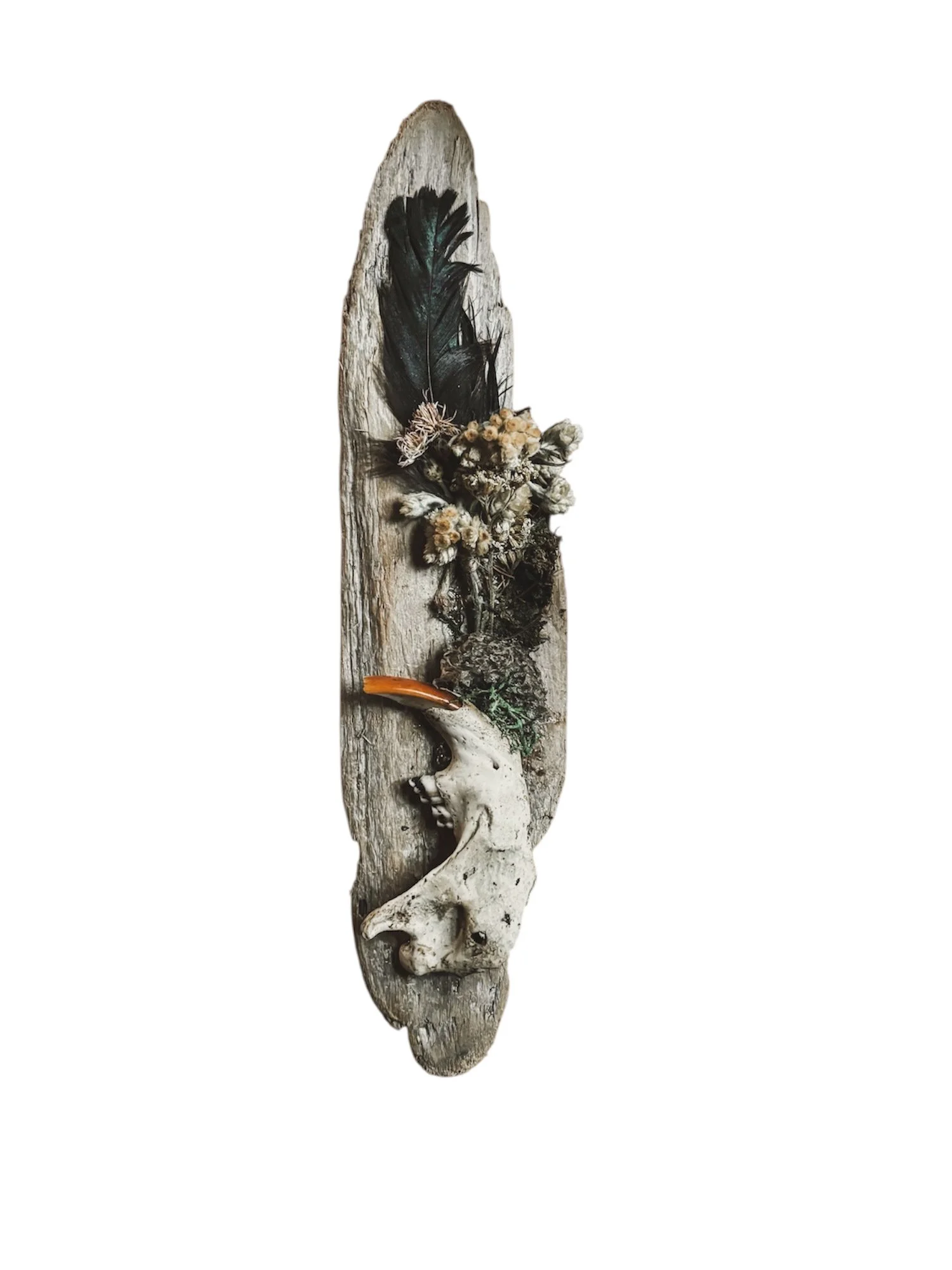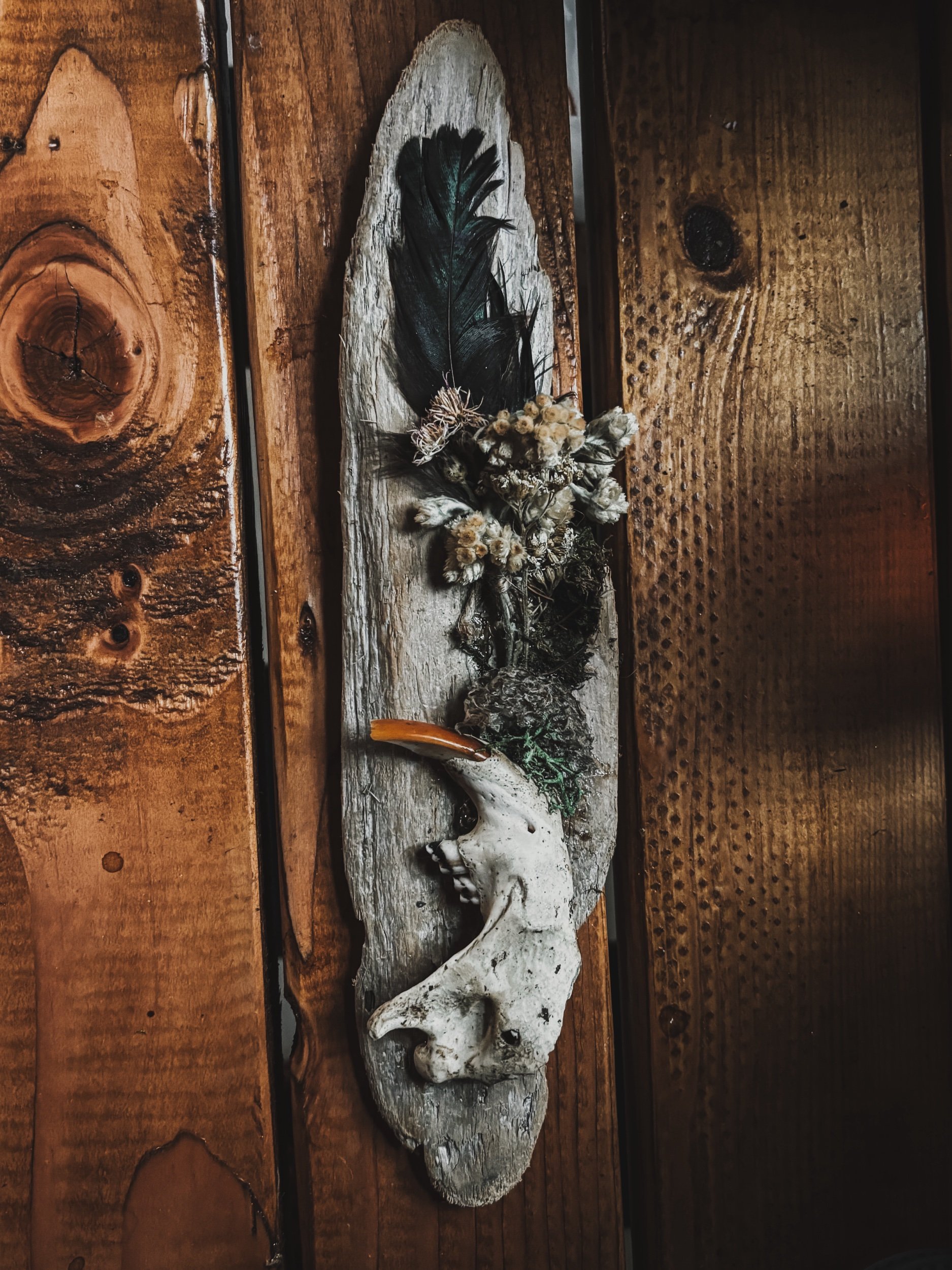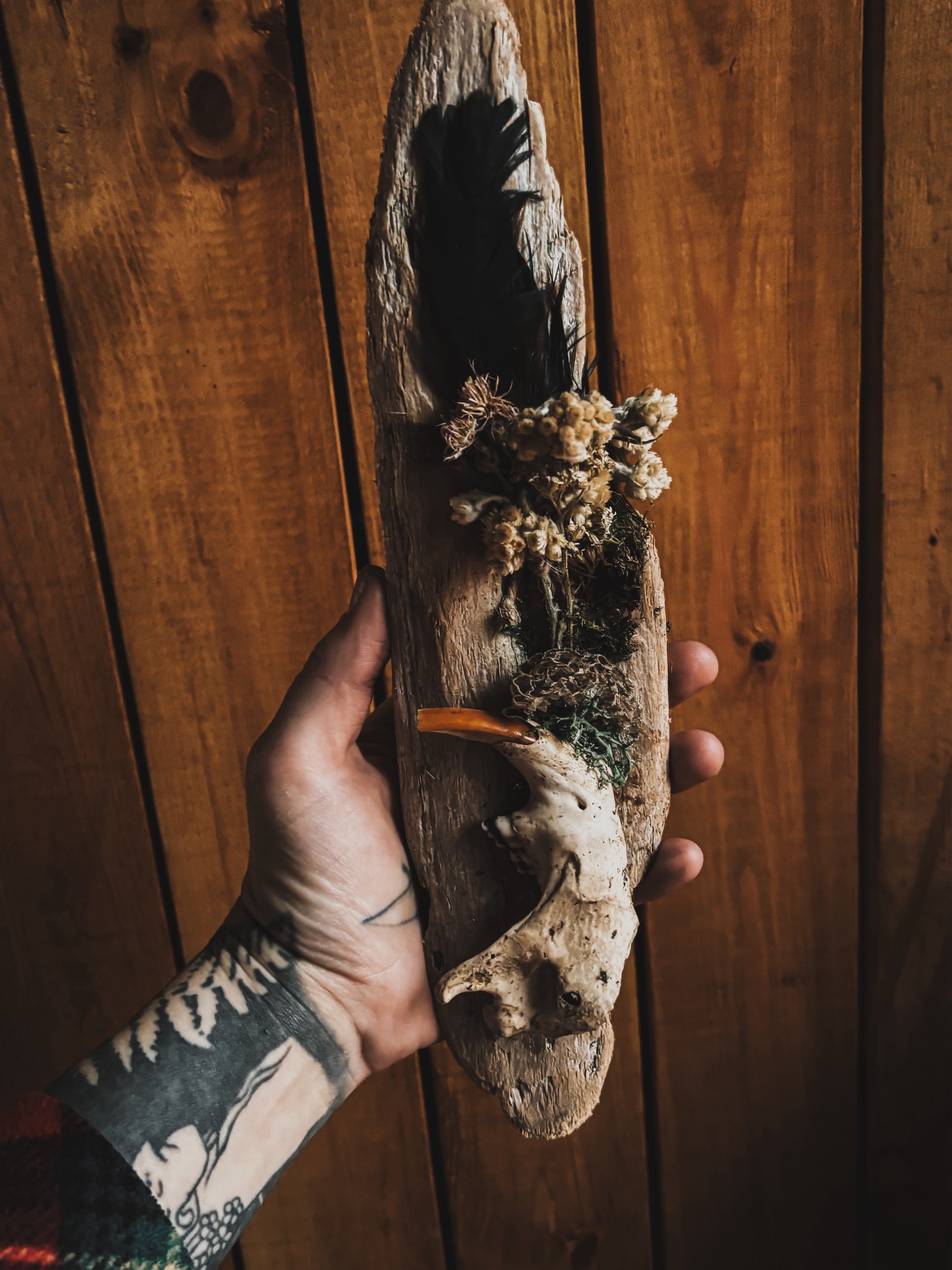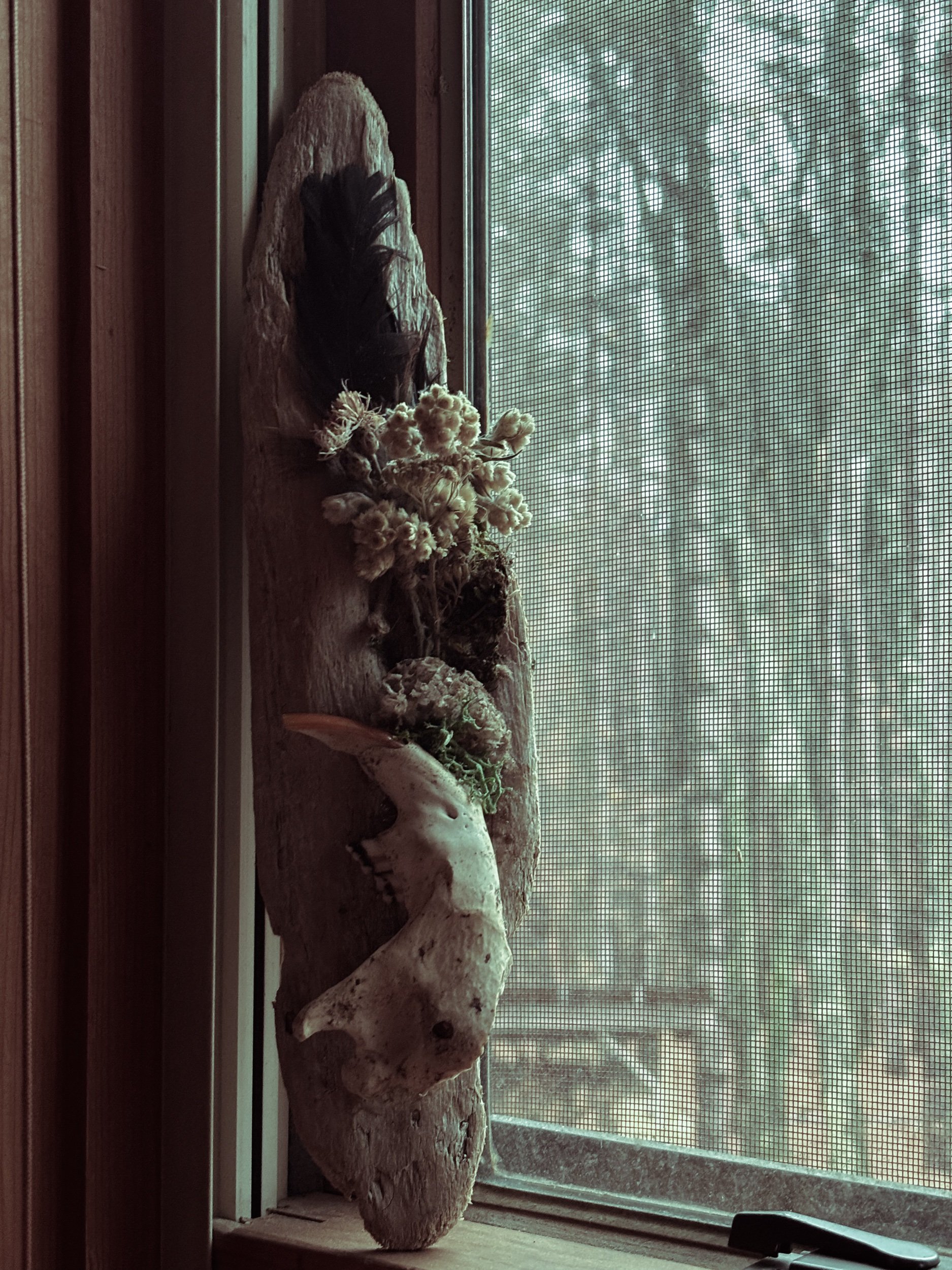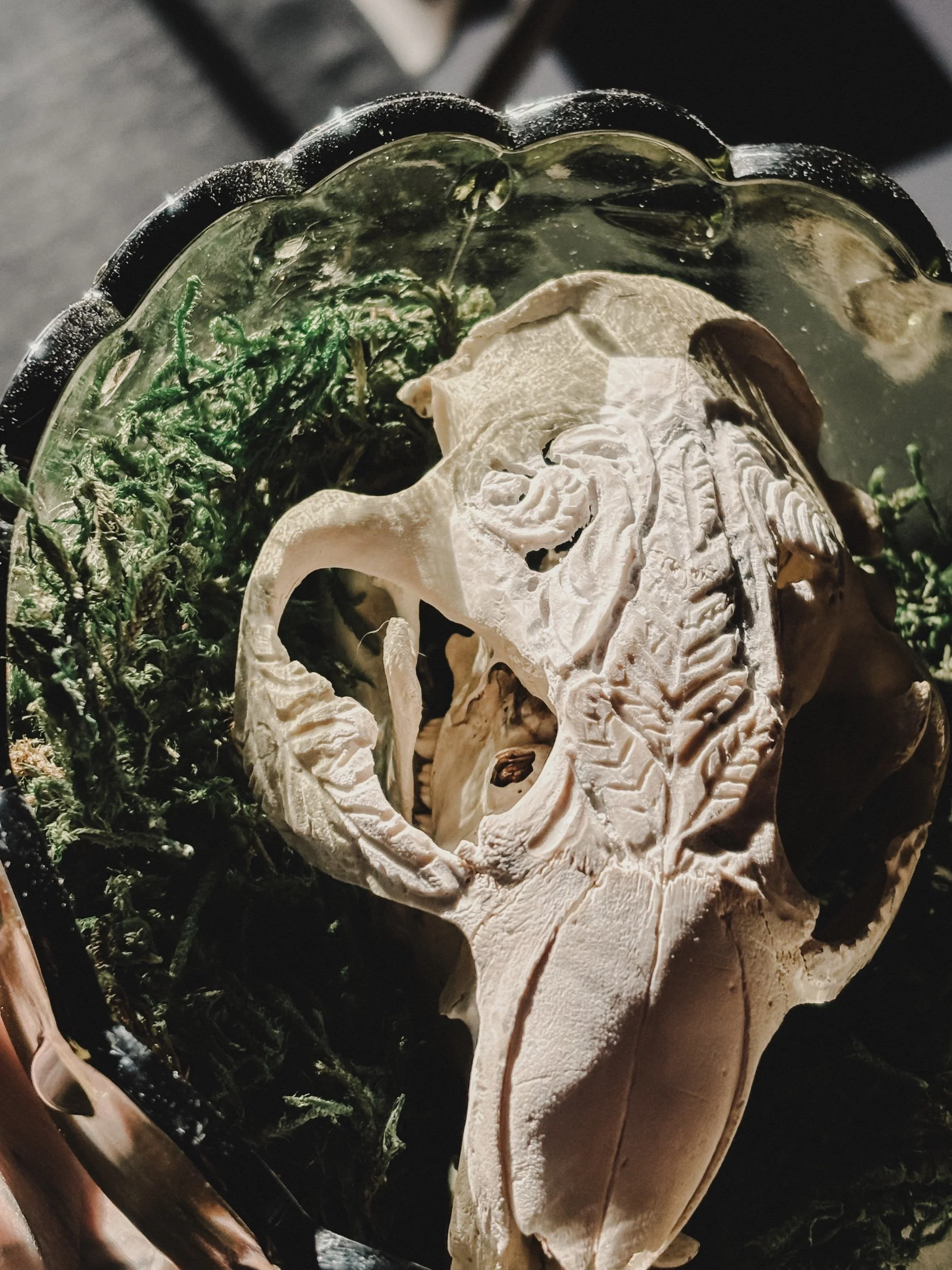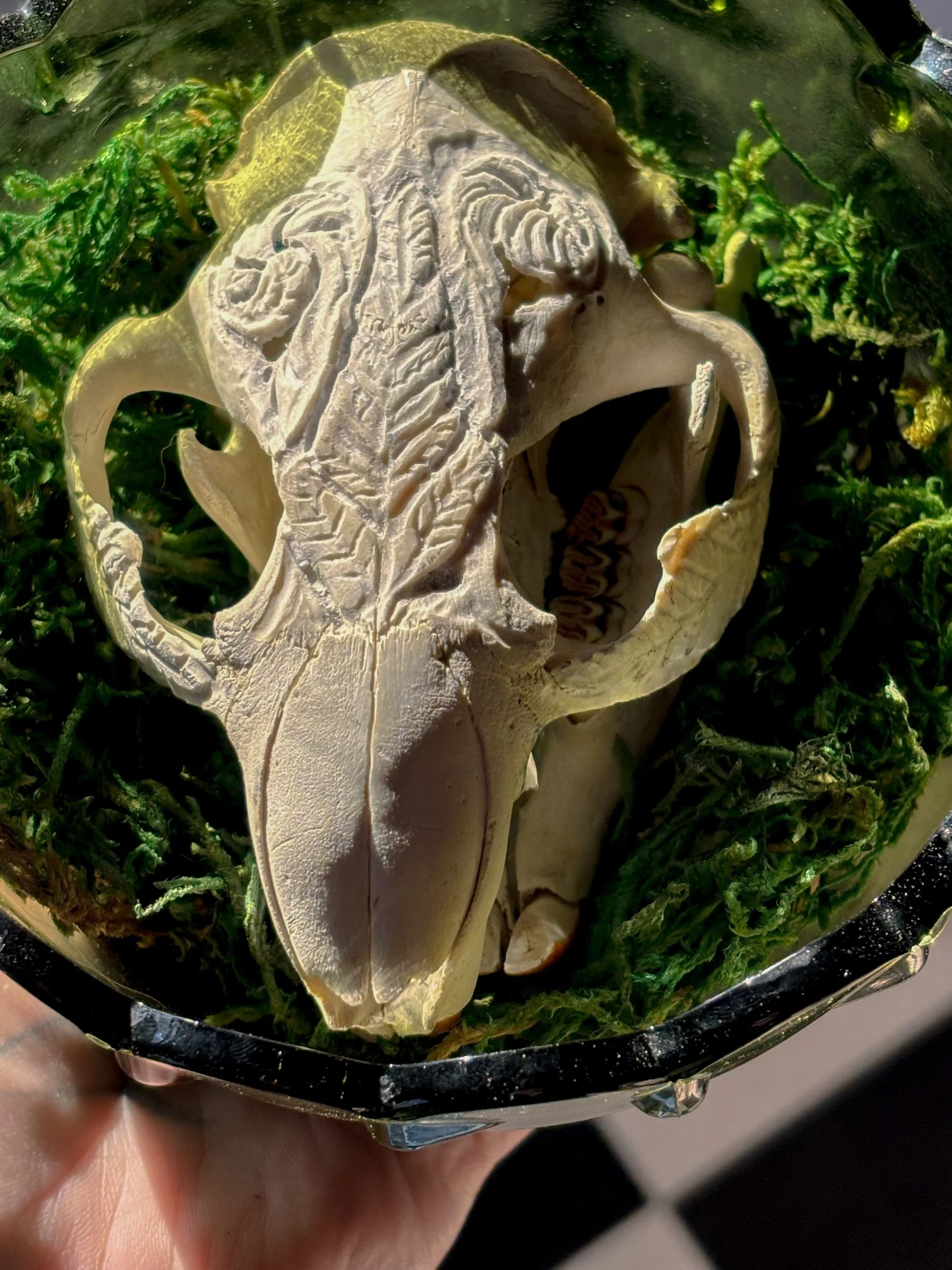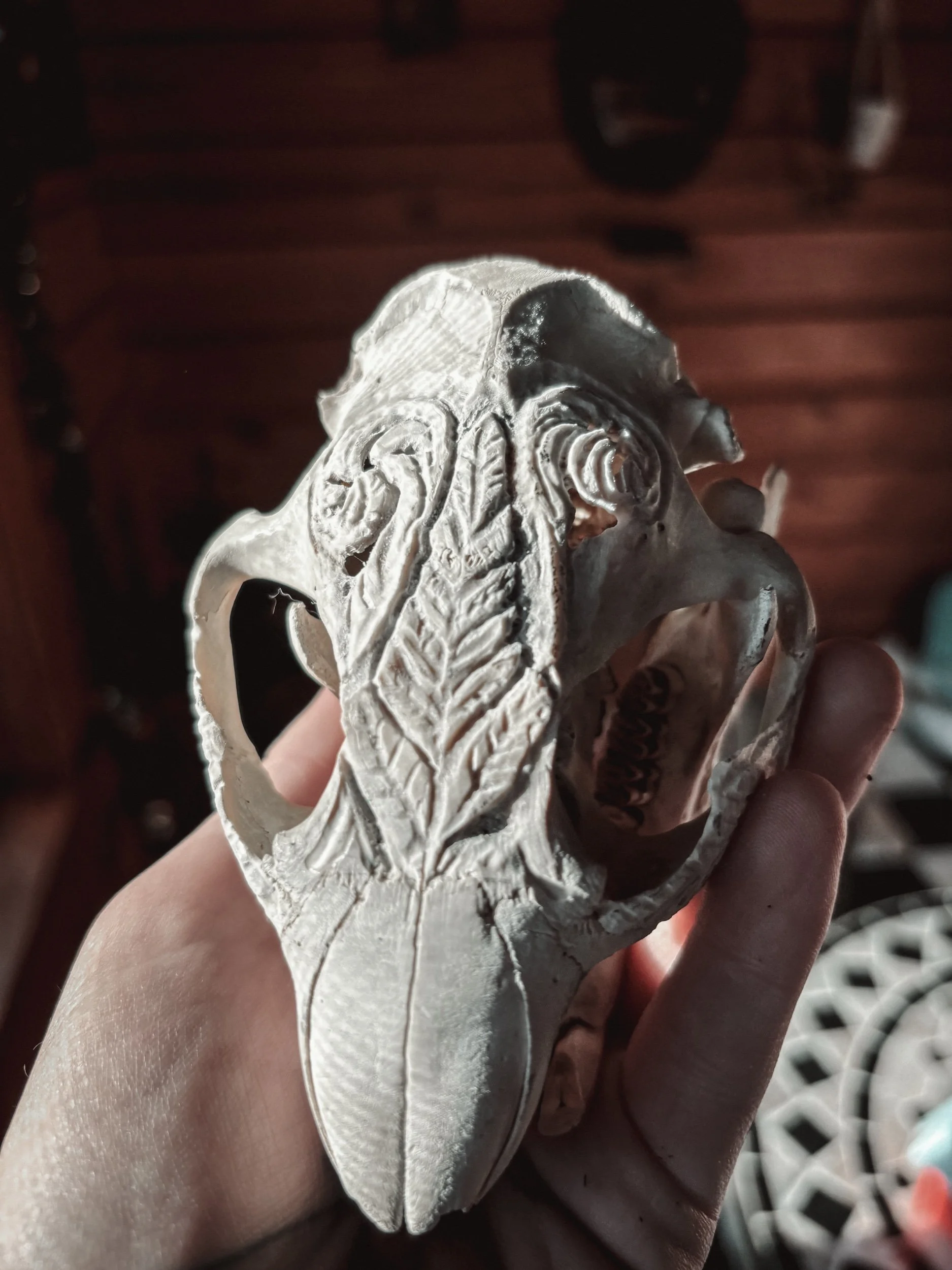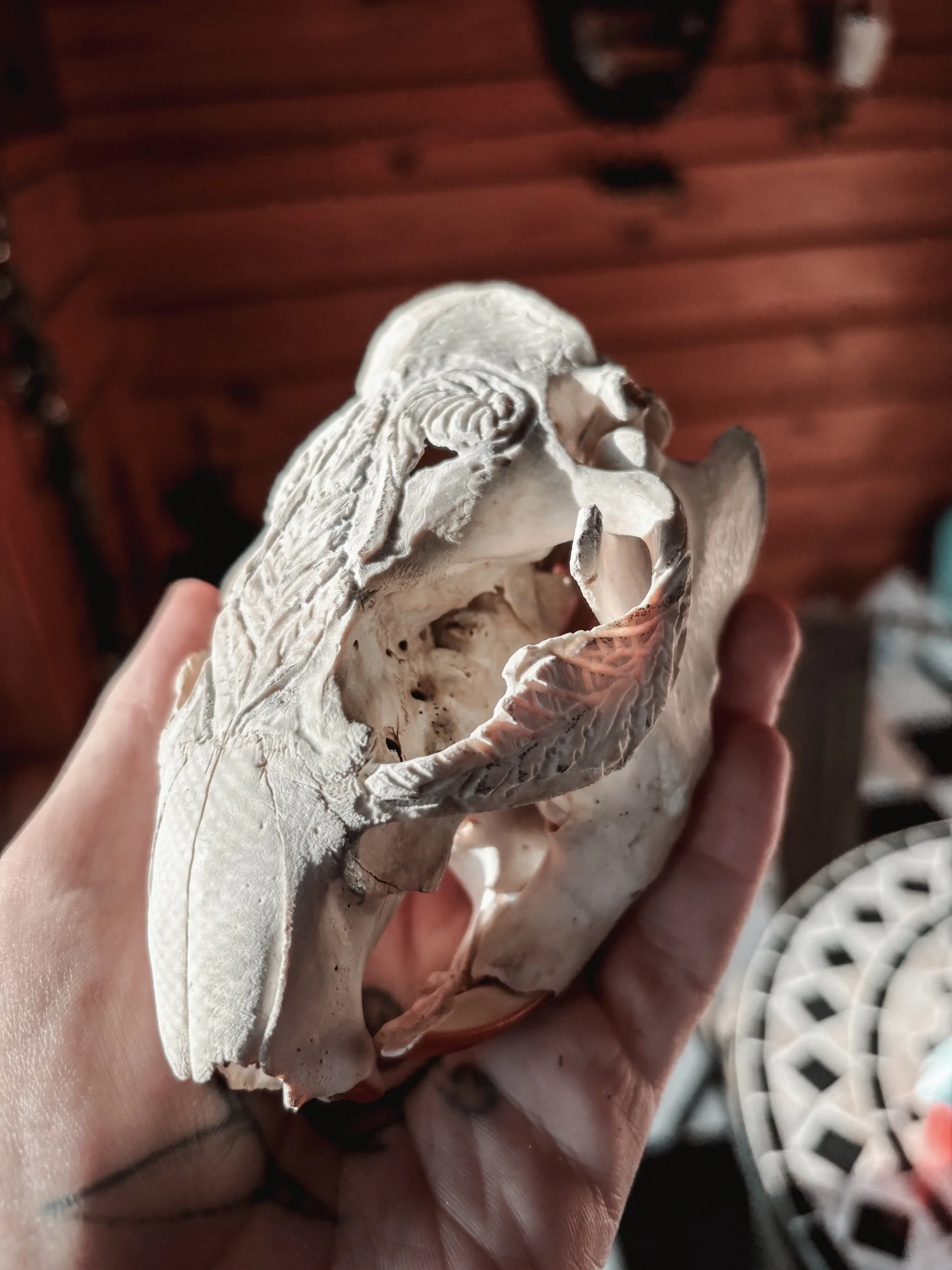


Hand-Carved Icelandic Sheep Skull • Jade • Forest-Warded Artifact
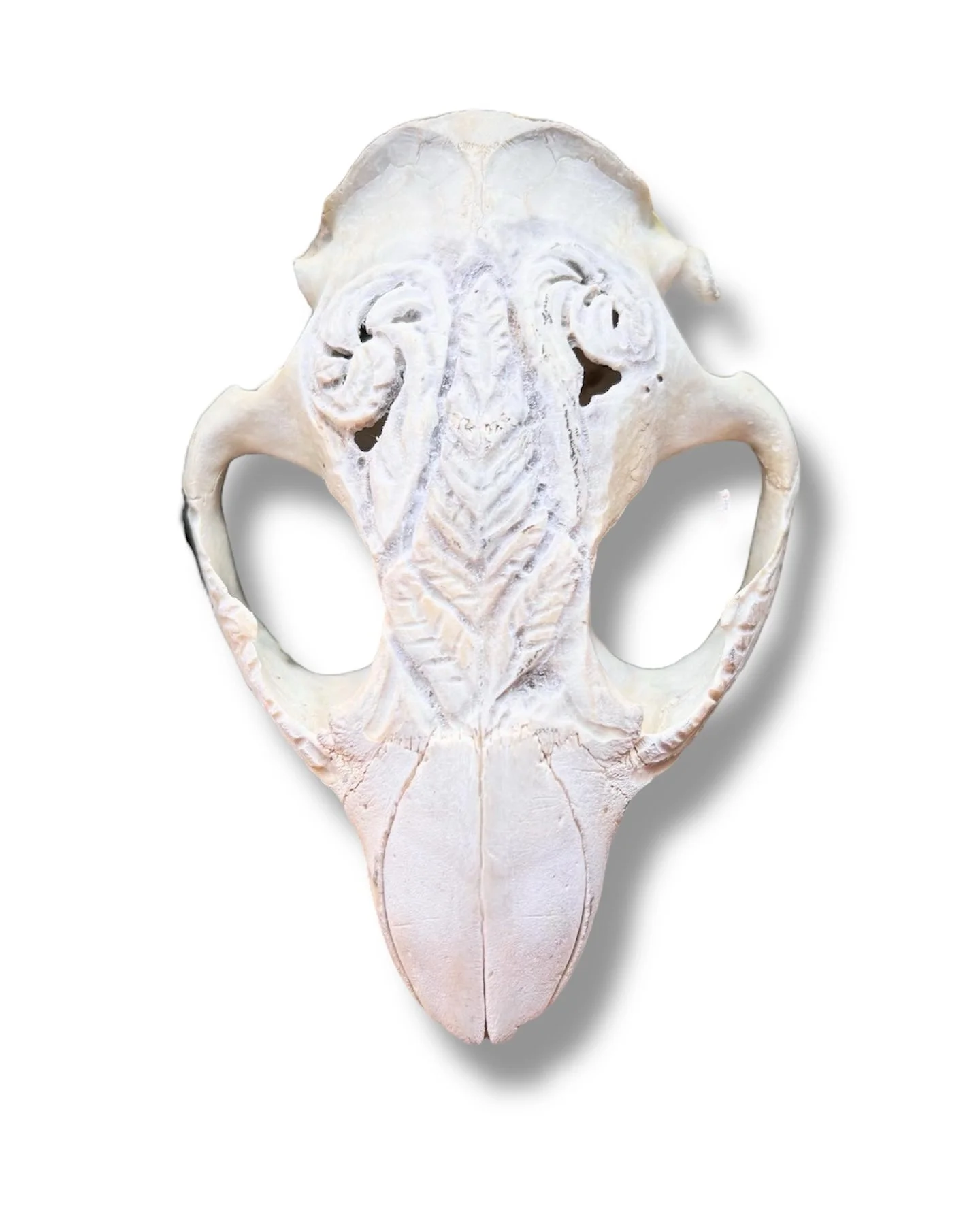
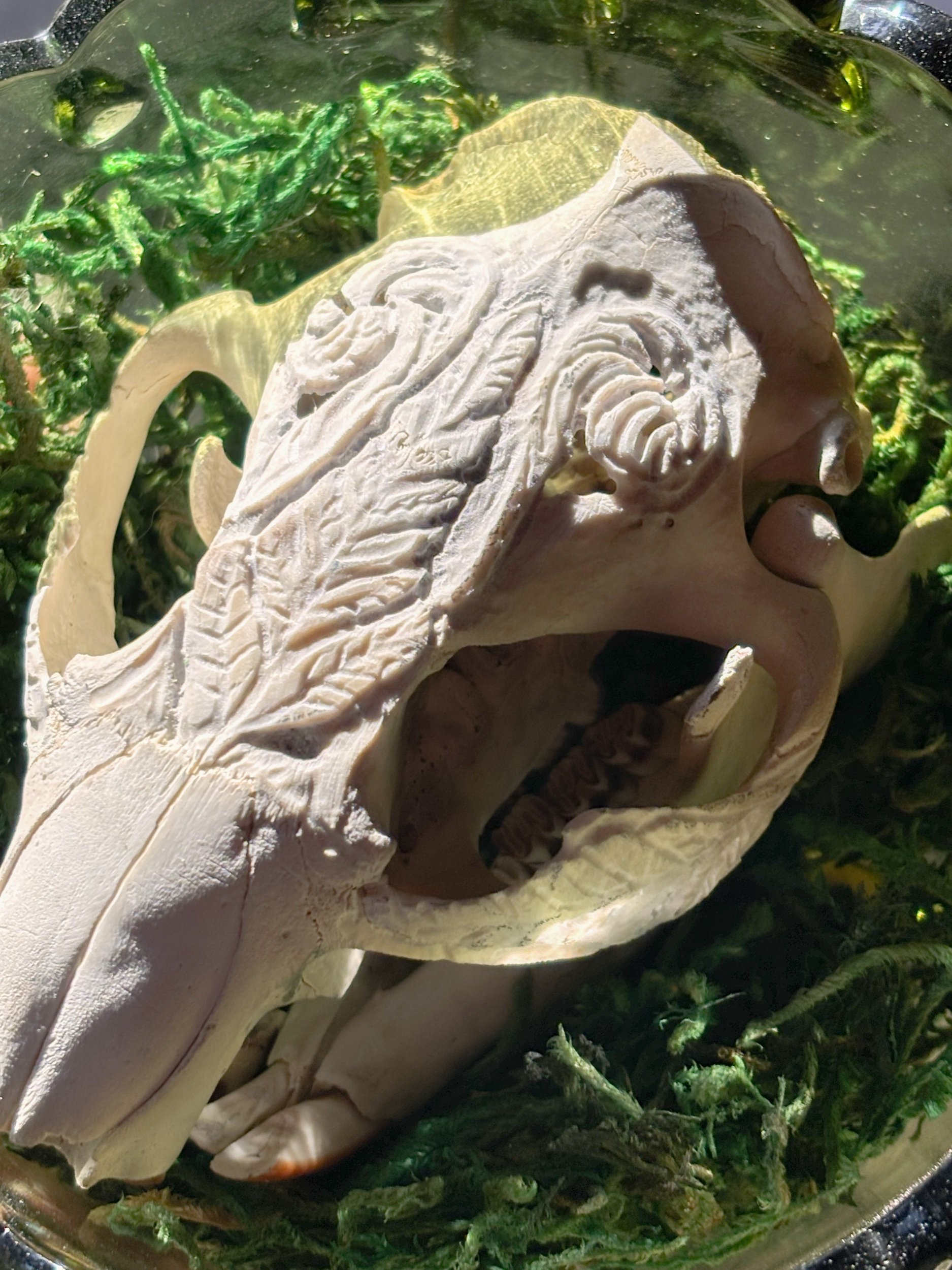
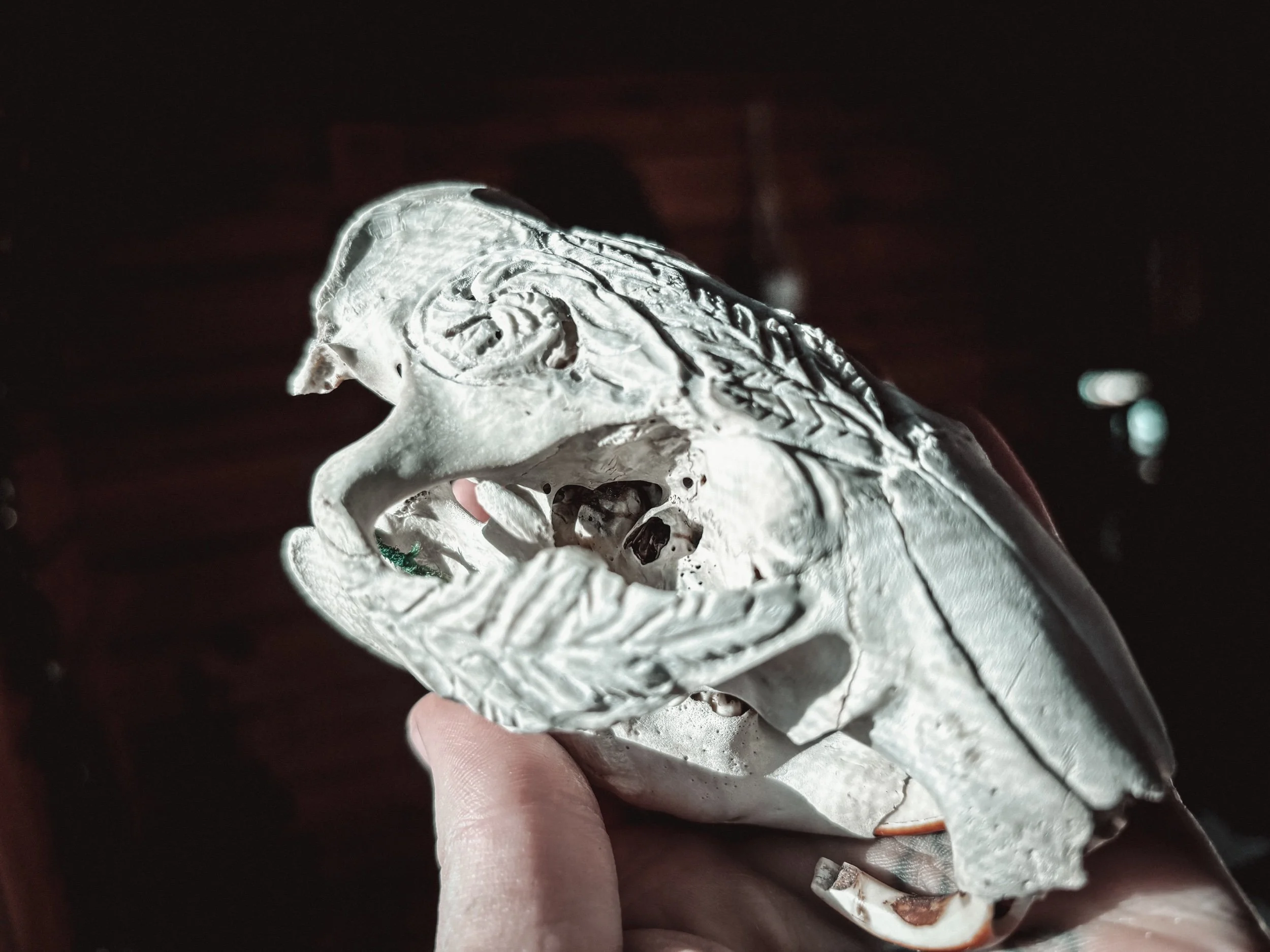
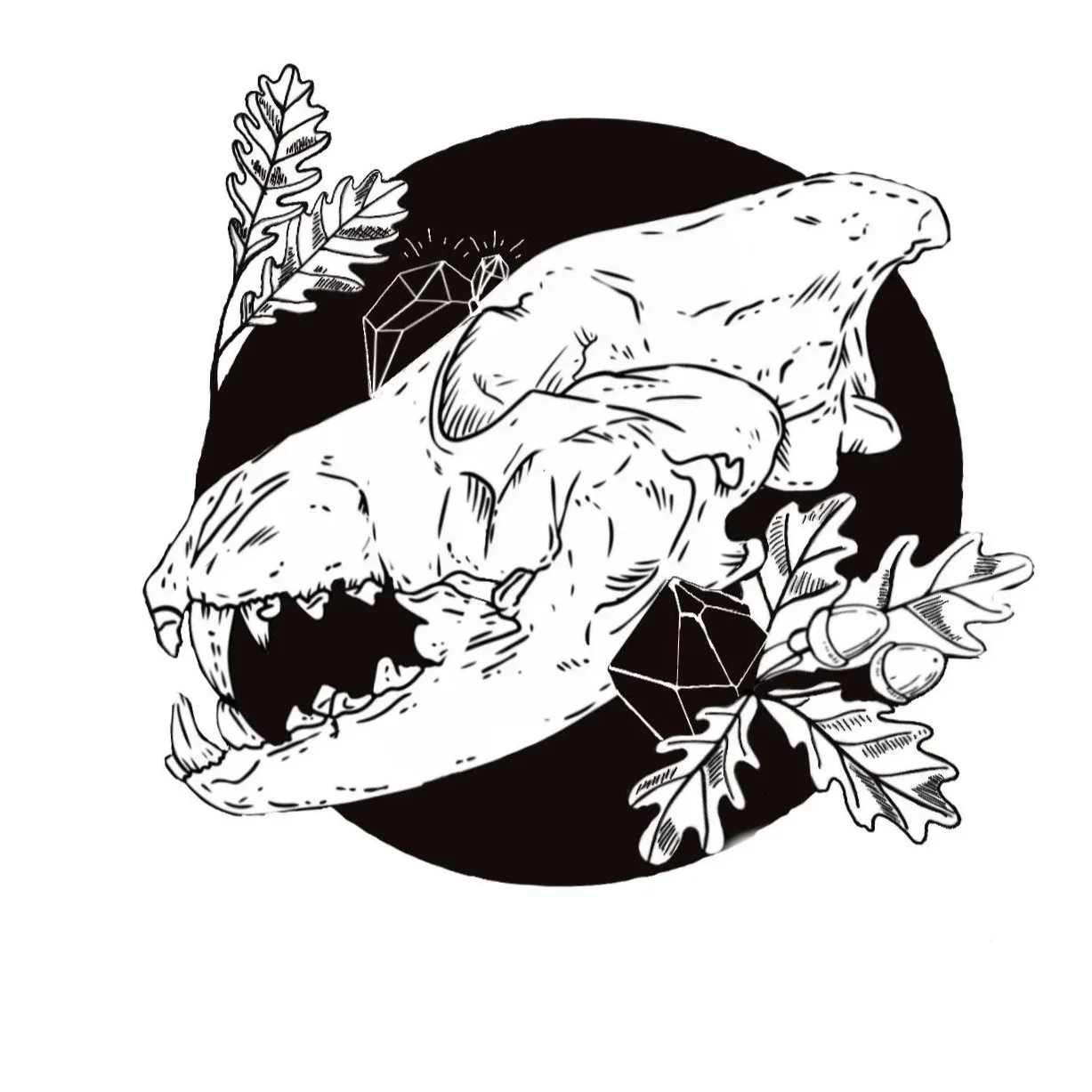
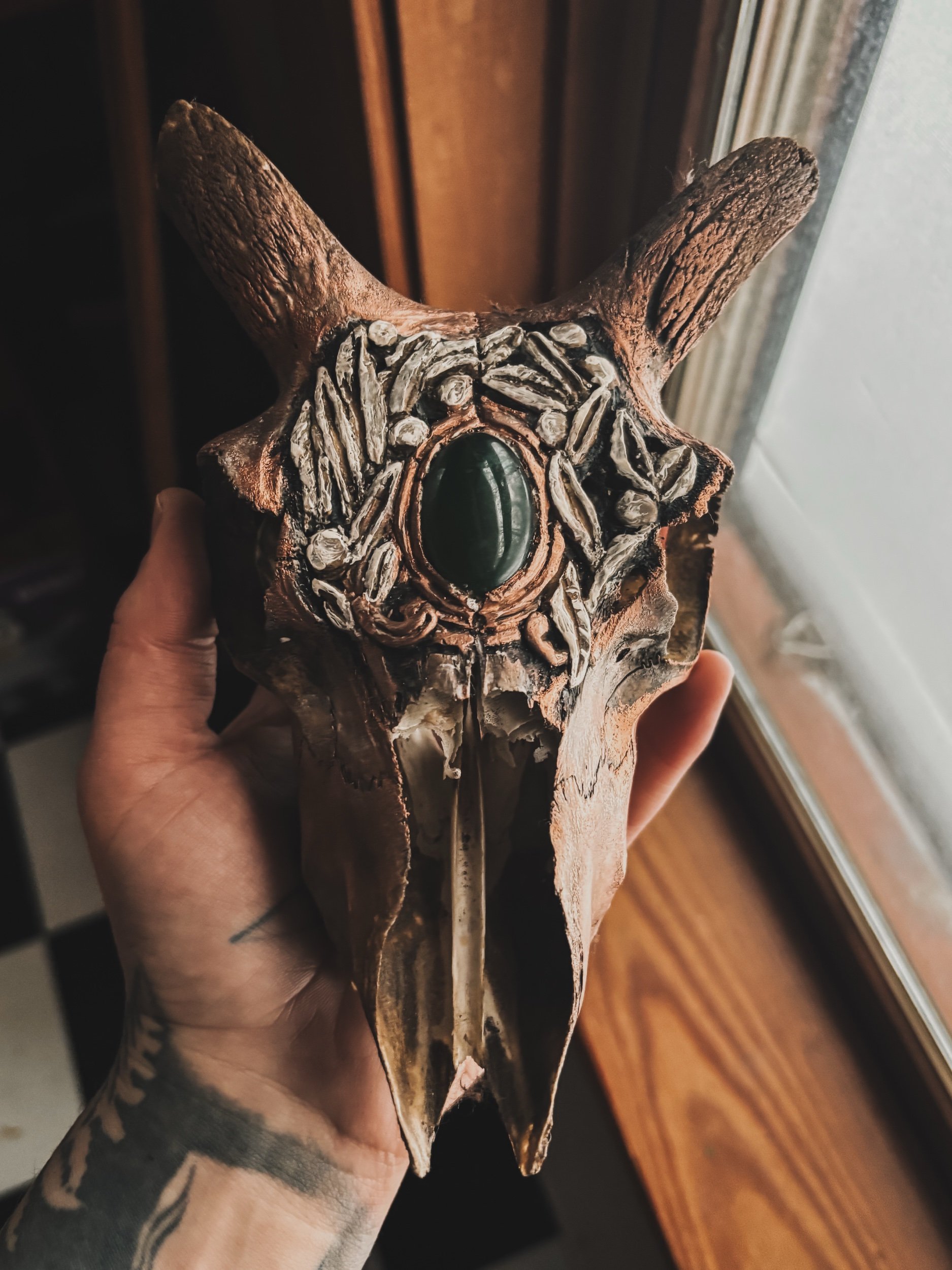
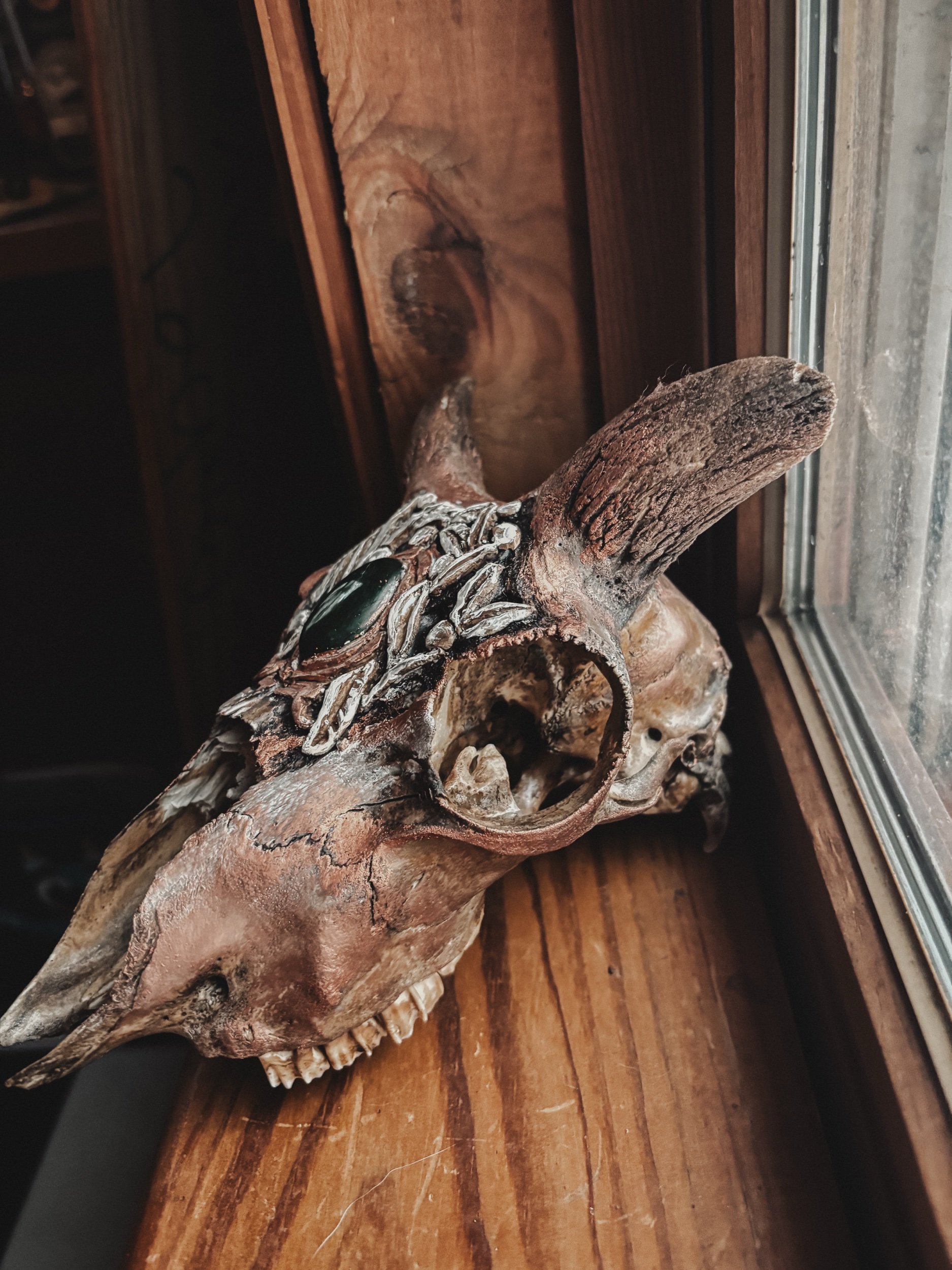
This piece begins as a genuine Icelandic sheep skull, a breed whose lineage traces back to Norse settlers and some of the oldest domesticated sheep in the world. The bone has been hand-carved and transformed, its surface shaped, textured, and aged into a relic that feels as though it was unearthed from an old forest shrine rather than made in the modern world.
Warm, darkened tones and soft gold glints rest in the grain of the bone like the memory of firelight and offerings long past.
Set into the brow is a polished jade cabochon, placed where a third eye or heart might be — a focal point that binds life force, protection, and endurance into the skull. Jade has been used across many cultures as a stone of spiritual grounding and vitality, making it a powerful companion to bone, which holds the memory of what once lived.
Surrounding the stone are hand-carved organic sigils and textures, reminiscent of grain heads, roots, and warding patterns. These are not written symbols, but natural ones — echoing old land magic, herd magic, and the quiet, protective rituals of people who once depended on animals for survival.
The horns frame the relic like a crown, evoking the sheep’s ancient role as both provider and sacred animal — giver of wool, food, warmth, and life. This skull feels less like an object and more like a kept thing, something that belongs on a shrine, altar, or in a collection of true ritual art.
Symbolism
• Icelandic sheep skull — endurance, ancient lineage, survival through harsh worlds
• Jade — protection, life force, spiritual grounding
• Carved bone — intention, human touch, ritual shaping
• Horned form — guardianship, thresholds, wild strength
Hand-Carved Icelandic Sheep Skull • Jade • Forest-Warded Artifact
This piece begins as a genuine Icelandic sheep skull, a breed whose lineage traces back to Norse settlers and some of the oldest domesticated sheep in the world. The bone has been hand-carved and transformed, its surface shaped, textured, and aged into a relic that feels as though it was unearthed from an old forest shrine rather than made in the modern world.
Warm, darkened tones and soft gold glints rest in the grain of the bone like the memory of firelight and offerings long past.
Set into the brow is a polished jade cabochon, placed where a third eye or heart might be — a focal point that binds life force, protection, and endurance into the skull. Jade has been used across many cultures as a stone of spiritual grounding and vitality, making it a powerful companion to bone, which holds the memory of what once lived.
Surrounding the stone are hand-carved organic sigils and textures, reminiscent of grain heads, roots, and warding patterns. These are not written symbols, but natural ones — echoing old land magic, herd magic, and the quiet, protective rituals of people who once depended on animals for survival.
The horns frame the relic like a crown, evoking the sheep’s ancient role as both provider and sacred animal — giver of wool, food, warmth, and life. This skull feels less like an object and more like a kept thing, something that belongs on a shrine, altar, or in a collection of true ritual art.
Symbolism
• Icelandic sheep skull — endurance, ancient lineage, survival through harsh worlds
• Jade — protection, life force, spiritual grounding
• Carved bone — intention, human touch, ritual shaping
• Horned form — guardianship, thresholds, wild strength